

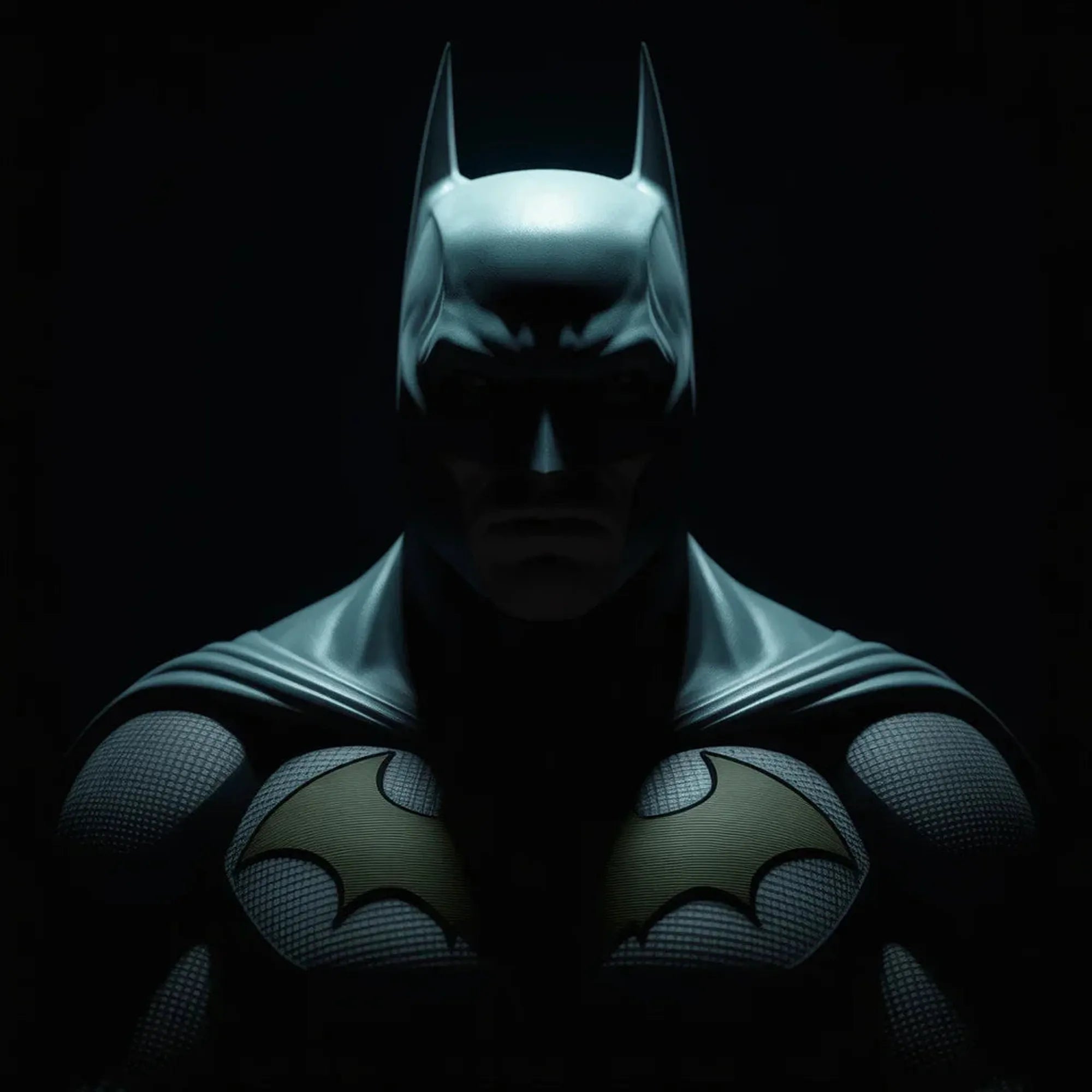
Picture it: 1988. Warner Bros. announces that Michael Keaton—yes, the guy from Mr. Mom and the ghost who won’t shut up in Beetlejuice—is your new Dark Knight. Within days, the studio mailroom looks like a post-apocalyptic Hallmark store: 50,000 furious letters from fans saying, essentially, “Absolutely not, chief.” Too short. Too funny. Too wrong. Comic shops run letter-writing campaigns. Entertainment mags politely wonder if the studio has bonked its head on a gargoyle.
Execs panic, dial up Tim Burton, and ask the most Hollywood question ever: “Sooo… can we recast?” Burton, who collects black turtlenecks and chaos, says, “No. Michael is Batman. Trust me.” The suits do not trust him—but they’ve already spent a dump truck of money, so the train keeps rolling while Keaton reads headlines calling his casting “the worst decision in film history.” Fun workplace vibes.
Burton’s bat-vision: less camp, more therapy
In the 80s, “superhero” meant bright colors, earnest smiles, and the Adam West diet of holy-whatever-Batman! Burton wants a different beast: gothic architecture, psychological damage, trauma in a cape. The studio wants… toys, happy meals, and not to get fired. Burton smiles, tilts a gargoyle, and bakes nightmares into a blockbuster anyway.
Enter the Joker: Jack’s deal that robbed Fort Knox (legally)
Jack Nicholson is the biggest grin in Hollywood and allergic to bad contracts. When WB comes calling about the Joker, he says yes—with a twist. Instead of just a fat salary, he locks in a profit-share on the movie and the merch. The suits figure he’ll make $10–15M if it pops. The movie detonates, and Jack reportedly walks away with around $60 million. That cackle you hear in the distance? That’s his accountant.
Keaton’s problem: the batsuit is a rubber prison
The original suit is basically a Michelin Man who skipped yoga: no neck turn, barely any hearing, zero comfort. Keaton can’t do tiny facial moves or slick action beats—so he pivots. He weaponizes stillness. He lowers his voice to a gravelly rasp, moves like a horror statue, and turns the suit’s limits into Batman’s menace. Crew members go from “Mr. Mom? really?” to “Oh… oh. That is Batman.”
Jack’s problem: none whatsoever
Nicholson strolls in like chaos in Italian leather. He improvises, he laughs between takes, he turns the museum scene into a vandalism dance-off to Prince. The Joker isn’t just a villain; he’s a chemical spill with a tux. Burton encourages the madness because unpredictability reads hotter than any storyboard.
Why the pairing works: fire vs. ice
Burton sums it up: “Jack was fire. Michael was ice.” Nicholson devours the room; Keaton freezes it. In their face-offs, Keaton refuses to get big. He just stands there—quiet, coiled, scary—while Jack unspools into technicolor madness. Attention demanded vs. attention commanded.
Release weekend: the bat-symbol eats the planet
June 23, 1989. Execs are still sweating the backlash, the darkness, the weird art-deco-goth city. Audiences show up anyway like they’ve been waiting their whole lives. $40.5M opening weekend—a record then. Domestic hauls blast past $250M; worldwide smashes through $400M+. The Prince soundtrack goes platinum. Bat-logos flood every mall window like a cult of very fashionable bats. Action figures, posters, cereal boxes—if you could slap a logo on it, congratulations, you were rich.
And Nicholson’s contract? That “reasonable risk” balloons into ~$60M, making it the slickest villain payout in history. Gotham wasn’t the only thing he robbed.
What Batman ’89 actually did (besides fund a small nation)
- Ended the camp era. It proved you can go dark, psychological, and art-directed to hell and still sell truckloads of tickets.
- Made “serious superhero movie” a thing. Without this, we probably don’t get The Dark Knight template, modern prestige capes, or your aunt arguing about “best Joker” at Christmas.
- Turned limitations into style. Keaton’s stillness, the rubber suit, the matte paintings—constraints became the vibe.
- Gave Burton a golden hall pass. He wins a long creative leash for the rest of his career—and doubles down with Batman Returns (1992) weirdness.
Reputation rehab: from “fire him” to “don’t touch him”
The same fans who organized letter campaigns now guard Keaton like a national park. He returns in Batman Returns, and decades later his name drop alone melts the internet. Meanwhile, Nicholson’s Joker becomes the yardstick—every new Clown Prince is graded on a curve Jack helped draw, until Heath Ledger redraws it in knife-scratched pencil.
The expensive moral of the story
Sometimes the riskiest choice is the one that resets the genre. Keaton went from “He’s too funny” to “He is Batman.” Burton bet on darkness and made a fortune. Nicholson bet on himself and made… well, a different kind of fortune. Batman (1989) didn’t just win a weekend; it grew the entire medium up.
Fifty thousand angry letters tried to stop it. Instead, they accidentally wrote the prologue.
Throwback Paradise is run by unapologetic 80s/90s superfans. We research the lore, crack the jokes, and design fresh, premium tees you won’t find anywhere else. If nostalgia had a pro shop, this would be it.


